


Lately you have been seeing an inordinate number of dead branches? Or perhaps the leaves on a particular tree are browning while its neighbours are green. You may be left to wonder if that oozing on the trunk is cause for concern.
We hear such questions frequently at A&M Tree Care. As a family firm we have been in the tree care business in Cabot and the Greater Little Rock area from 2016 to the present day. If a tree has you in some doubt, put in a call to (501) 599-4866 and let our experience be your guide.
A tree will not tell you it is in trouble, but it does put out signals. The key is to spot them before they become a hazard in your yard. What follows are the indications of a disease or pest issue.
Leaves: The First Place to Look
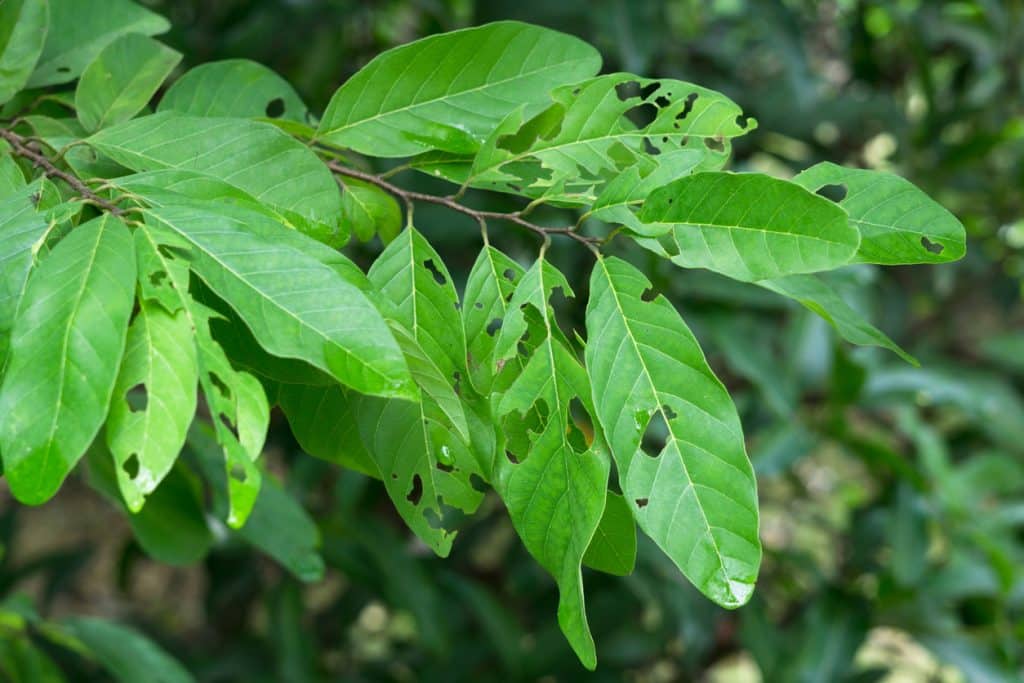
You will find trouble in the leaves before anywhere else. In the growing season a tree in good health puts on foliage that is full and of an even colour; any deviation from that is telling.
Be on the lookout for:
- Brown, yellow or spotted leaves when it is not yet fall
- Canopy thinning as leaves drop early on one tree but not the rest
- Leaves that are stunted, wilted or curled
- Patches of bareness in the canopy with the adjacent branches looking fine
- Any sticky residue under or on the leaves, a sure sign of insects at work
An odd leaf here and there is no account of anything, but an entire part of the canopy turning brown in the middle of summer is something to examine.
The Bark and Trunk
This is where the tree is shielded, so any damage is of a serious nature. Yet some of the most egregious problems are in plain view on the trunk for homeowners to miss.
Signs to note include:
- Deep wounds, splits or cracks in the bark
- Bark that is coming away or peeling
- Dark streaks or sap oozing down the trunk
- Shelf-like growths, mushrooms or fungus along the trunk or at the base
- Small holes in the bark with sawdust about, often from boring insects
Fungus at the base is indicative of decay within. A tree can look perfectly all right on top and still be rotting and a danger.
Branches and the Shape of the Thing
Step back and consider the overall structure. A tree that is on the way down will not resemble the healthy ones in the vicinity.
- Scattered dead branches in the canopy
- Branches with a brittle feel that are prone to snapping
- More of a lean than was there before
- New growth confined to low on the trunk
- Less vigorous growth than other trees of the same kind
And dead branches are not just unsightly. In a storm they can come down on your car or home. Several of them and you should do something about it.
Roots and Base
Do not neglect the base of the tree. The roots are what hold it up and issues at ground level can be a quiet threat.
Check for heaving of the soil to one side, a sign of root failure, or exposed roots in a state of disrepair. Soft or spongy wood near the ground and fungal growth in the surrounding soil are also red flags.
Making the Call
There is no need to think a tree is dying over every brown leaf. But a combination of these signs is a clear message. Early intervention is what separates a saved tree from one that has to go.
Plant health care is central to what we do at A&M Tree Care and we are mindful of the environment in how we go about it. We make a promise to our homeowners: we will not put pressure on you for services of no benefit to your trees. We will be as candid as to whether a tree can be put right or not.
For a free estimate without any charge for us to make the trip and diagnose the situation, give us a ring. We are open 7:00am to 6:00pm Monday to Saturday and on hand round the clock for any tree emergency. An ongoing 10% is extended to first responders and those in the military.
Don’t put off dealing with a tree that is giving you pause. Contact A&M Tree Care at (501) 599-4866.